
Raising prices in a mid-sized company: why the fear of refusal costs more than the increase
Raising prices in a mid-sized company: why the brain overestimates customer refusal, what customers see as fair, and how to test an increase with a threshold.
How do you raise prices without losing customers when you run a mid-sized company?
Justify the increase with a real cost, test it first on one customer segment, and set in advance the volume of departures you will accept. Customers see passing on a cost increase as fair, and exploiting a spike in demand as unfair (Kahneman, Knetsch and Thaler, American Economic Review, 1986). The main obstacle is the fear of refusal: according to prospect theory (Tversky and Kahneman, 1979), a visible loss weighs more than a margin that erodes. For Ludovic Savariello, neurocoach to business leaders, pricing is a decision to take out of emotion with a set threshold. It is one of the subjects covered by the Neurocoaching PME programme.
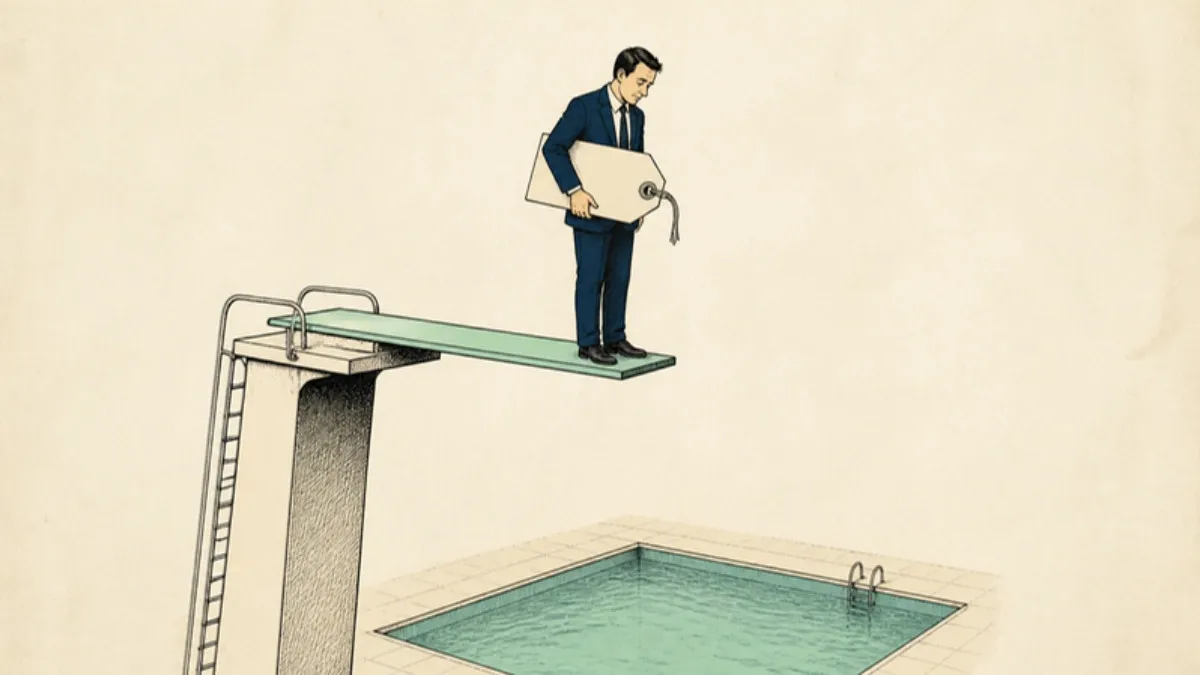
“We can’t put prices up, customers would leave.” I hear this sentence in executive committees every time costs rise faster than prices.
To raise prices in a mid-sized company without losing customers, you need to justify the increase with a real cost, test it on one segment, and set in advance the volume of departures you will accept.
What holds the leader back rarely has to do with the arithmetic. His brain overestimates the customer’s refusal and underestimates the margin that erodes without a sound.
The context of autumn 2026 makes the question concrete. In September, consumer prices in France rose 3.1 % year on year, driven by energy.
What do the autumn 2026 figures say?
According to Insee, in its final results of 15 October 2026, French inflation reached 3.1 % year on year in September. Core inflation, however, was only 1.5 %.
The gap comes from energy, up 21.3 % over the year. A shock this concentrated does not justify a uniform increase across the whole price list.
On the business side, Altares recorded 14,652 business failures in France in the third quarter of 2026, up 0.5 % year on year, and close to 72,000 over twelve rolling months, a record.
I do not link these failures to prices that are too low: no study establishes it. I simply observe, among the leaders I work with, a tendency to absorb cost increases into the margin.
That choice is usually made without ever being put into words. Nobody decided it in the executive committee, and yet it weighs on every invoice.
Absorbing the increase weakens the company before it shows
Take a company with €10 million in revenue and an operating margin of 5 %, or €500,000. The calculation that follows is an example, not a statistic.
If its costs rise by 2 % of revenue and it passes none of that on, its profit falls to €300,000. It drops by 40 % without a single customer leaving.
This is where growth becomes fragile. Profit funds next year’s hires and the cash cushion that lets the company get through a difficult quarter.
The leader sees the customer they might lose. They see far less clearly the €200,000 that will be missing next year to hire their future sales director.
A company’s resilience is also decided here: in its ability to charge for the value it creates, year after year, without waiting for a crisis to react.
Why does the brain prefer losing margin to losing a customer?
In 1979, Amos Tversky and Daniel Kahneman published prospect theory in Econometrica. We judge our choices in terms of gains and losses, relative to a starting point.
Their value function is steeper on the side of losses. Losing a sum weighs more than gaining the same sum.
On a price list, the asymmetry works at full strength. The customer who leaves is a dated loss, with a name. Three points of margin gone in a year have no face.
The brain protects what it can see.
I ran a company that I took beyond €40 million in revenue. I know how heavy it feels, at the moment you send it, the letter announcing an increase to a long-standing customer.
A second mechanism comes from my observation as a practitioner, not from a laboratory result. Keeping prices unchanged means not deciding. Raising them makes the leader accountable, and the status quo offers shelter.
Heads, commercial relationships are preserved. Tails, the company alone funds the rising costs of its own suppliers.
Customers accept an increase explained by a real cost
In 1986, Daniel Kahneman, Jack Knetsch and Richard Thaler studied in the American Economic Review what the public considers fair in the way companies set prices.
A large majority of respondents accepted that a company passes on a rise in its purchasing costs. They considered it unfair, on the other hand, for it to profit from a spike in demand.
The study’s example has become famous. A hardware store raises the price of snow shovels from 15 to 20 dollars the morning after a storm: 82 % of the 107 respondents found it unfair.
For a leader, the lesson is practical. Customers accept an increase whose cause they understand more readily than one announced without explanation. How you announce it matters as much as the percentage itself.
A word of caution on its reach: the study surveyed North American consumers by questionnaire in 1986. It sheds light on a logic, it does not predict how your own customers will react.
Raising prices in a mid-sized company starts with a set threshold
The method rests on one principle: replace the impression with a numerical threshold, set before announcing anything.
Calculate the volume you can afford to lose. With a contribution margin of 30 % of the price and a 3 % increase, volume can fall by about 9 % without hurting profit, that is 3 divided by 33.
Redo the calculation with your own margin. The question changes nature: you no longer ask whether customers will leave, but how many departures the company can absorb.
Test on one segment. Choose a group of customers or a product range, then observe for a quarter. The test turns a fear into data.
Start with new contracts. A new customer discovers your price with no point of comparison. In Tversky and Kahneman’s logic, they experience no loss, since they have no earlier reference price.
Long-standing customers, on the other hand, compare with the old rate. Announcing it to them takes more care and a longer notice period.
Look at dependence before the increase. If one customer weighs heavily in revenue, the fear of losing them is legitimate. Handle them separately, in a meeting, with the same explanation.
That dependence is a signal in itself. A company that cannot revise its prices with one customer lets that customer set its margin.
Target what has really gone up. If the increase comes from energy, concentrate it on the products that use the most. An increase that can be explained in one sentence can be defended in one sentence.
Write the announcement sentence. For example: “Our energy costs have risen, and we are passing on part of that increase from 1 January.” If it feels awkward to say aloud, the work still has to be done internally.
Set the rule for backing off. Decide before launching which level of departures triggers a step back. A rule set in cold blood avoids a decision taken in the heat of the moment, at the first unhappy customer.
Pricing reveals the quality of a company’s decisions
In an earlier piece on the growth ceiling of mid-sized companies, I described the decisions a leader keeps postponing and that block everything else. Pricing is one of them.
Raising prices in a mid-sized company requires neither investment nor reorganisation. It requires looking a fear in the face, with a number set before the emotion.
As with any cognitive bias, the will to be rational is not enough. A rule written in advance corrects better than a good resolution.
An increase a customer refuses can be recovered through negotiation. Three years of margin absorbed in silence, far less easily.
An exercise for this week: calculate the volume of customers you can afford to lose with a 3 % increase. If the number surprises you, your fear was using a different arithmetic.
Frequently asked questions
How do you announce a price increase to customers?
By giving the real cause of the increase and the date it takes effect. The work of Kahneman, Knetsch and Thaler (American Economic Review, 1986) shows that the public broadly accepts a company passing on higher costs, while it sees profiting from a spike in demand as unfair. One plain sentence is enough, for example: our energy costs have risen, and we are passing on part of that increase from 1 January. Give customers time to adjust, and announce the increase yourself rather than through an invoice.
How much can you raise prices without losing profitability?
It depends on the volume you can afford to lose. With a contribution margin of 30 % of the price and a 3 % increase, volume can fall by about 9 % before profit declines, that is 3 divided by 33. The thinner the margin, the higher that threshold, and the more a modest increase protects profit. Redo the calculation with your own margin before deciding: the threshold replaces an impression with a number.
Should you pass all of inflation on to your prices?
Not necessarily across the board. In September 2026, French inflation reached 3.1 % year on year, but core inflation was only 1.5 %, because energy concentrated most of the rise at +21.3 % (Insee, 15 October 2026). If your costs are rising mainly on energy or on a few specific purchases, an increase targeted on the products concerned is easier to justify to customers than a general increase across the price list.
Why do business leaders hesitate to raise their prices?
Because the brain does not treat a visible loss and a diffuse loss in the same way. A customer who leaves is a dated loss, with a name. A margin that erodes by a few points a year has neither. Tversky and Kahneman’s prospect theory (Econometrica, 1979) describes this asymmetry: a loss weighs more than a gain of the same amount. The leader therefore protects the customer they can see, at the expense of the margin they cannot.