Interview
Ludovic Savariello
An engineer by training, entrepreneur, coach and author, Ludovic Savariello has built a resolutely unusual path. From technical work to supporting people, he has evolved his career by drawing on the foundations acquired at the school to explore new professional horizons. An inspiring account of engineers’ ability to reinvent themselves throughout their lives.
English translation of the interview published in French in Les Cahiers de Centrale Méditerranée Alumni, no. 60, March–April 2026, pages 4 and 5. Reproduced with the permission of the Centrale Méditerranée Alumni association. Read the French original.
Your career has taken you from engineering to entrepreneurship, then on to coaching, training and writing. When did you realise that your path would not follow a classic engineer’s trajectory, and how did you experience these different transitions?
I realised very early on that my path would not be “classic”. From the start of my studies at ESIM, something in me resisted the idea of a trajectory mapped out in advance. My passion for the sea led me to choose the naval engineering option, while training in parallel to become a professional diving instructor.
I always felt that an engineering education would give me rigour, analytical ability and method. It gave me a structure, an intellectual discipline. But deep down, I was never convinced I would devote my whole career to it. It was a solid foundation, not a final destination.
You created the JUMP@ method, which draws on neuroscience and on working with company leaders. How did your engineer’s mind – rigour, method, analytical ability – shape the construction of such a people-centred approach?
In 2012, a serious accident turned my trajectory upside down. The doctors told me I would spend two years in bed before I could hope to walk again. At the time, I was running two companies and crossing France every week. Everything was going to stop. Remote working was not widespread. I had to find another way.
I remembered a conversation, thirty years earlier, with Jacques Mayol, the first man to dive to 100 metres on a single breath, the man who inspired Luc Besson’s The Big Blue. He had told me that, thanks to the brain, nothing was closer at hand than the impossible. That sentence took on its full meaning.
I decided to look for techniques to speed up my recovery. Thanks in particular to mental imagery, I was able to walk again after one year. The doctors could not believe it. As for me, I was convinced I had opened the first page of the user’s manual for the only machine that governs our lives: the brain.
With an engineer’s approach, I wanted to understand the rest of that “manual”. I trained in Neuro-Linguistic Programming with its co-creator Richard Bandler, then in Ericksonian hypnosis, in neuroscience… Scientific rigour has always remained my guiding thread. I was trained by researchers in neurobiology, notably from the CNRS.
I then brought these tools together in a method I called JUMP@, because it was thanks to it that I was able to walk again sooner than the initial diagnosis predicted. At that point in my life, I had already spent twenty years creating companies whose common thread was innovation in the service of everyday life.
Naturally, I wanted to pass it on. Today I work with business owners on performance and growth, at a time when it is still possible to grow despite economic uncertainty. I also work with other professionals, including some players from the French national football team, always on this question of performance.
Many engineers hesitate to move away from purely technical careers. Which skills from your initial training proved most useful in succeeding in fields as varied as entrepreneurship, coaching and passing on knowledge? And what have been your most remarkable experiences, in terms of successes or difficulties?
My engineering education gave me scientific rigour, analytical thinking and a sense of observation applied to concrete problems. These skills are essential for an entrepreneur.
But without “soft skills”, the benefits can quickly evaporate. Understanding others, adapting, adjusting your management, giving meaning: this is indispensable, even when you are self-employed. My work with elite athletes has also shown me how poorly stress, motivation, meaning and management are often handled in companies.
As for successes and difficulties, my brain files them in the same place. Failure is the basis of learning. The value we attach to failure, particularly in France, is completely out of step with the way the brain works.
To learn to walk, a child falls on average more than 500 times. Imagine if ten-month-old children had the same fear of failure as we adults do. They would conclude that walking is not for them and decide to spend their lives on all fours.
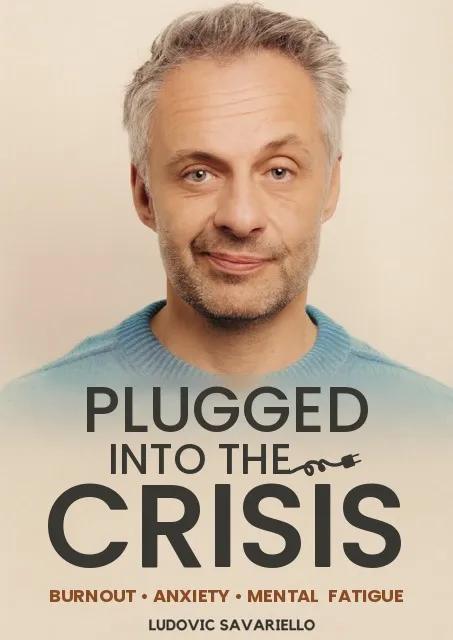
Success, on the other hand, takes on its full meaning when it comes with sharing and passing on. I felt this deeply on the opening night of my show “Plugged into the Crisis”, whose aim is to pass on this “user’s manual” for the brain to as many people as possible. This “psyshow” is a hybrid format, somewhere between a one-man show and a TEDx talk.
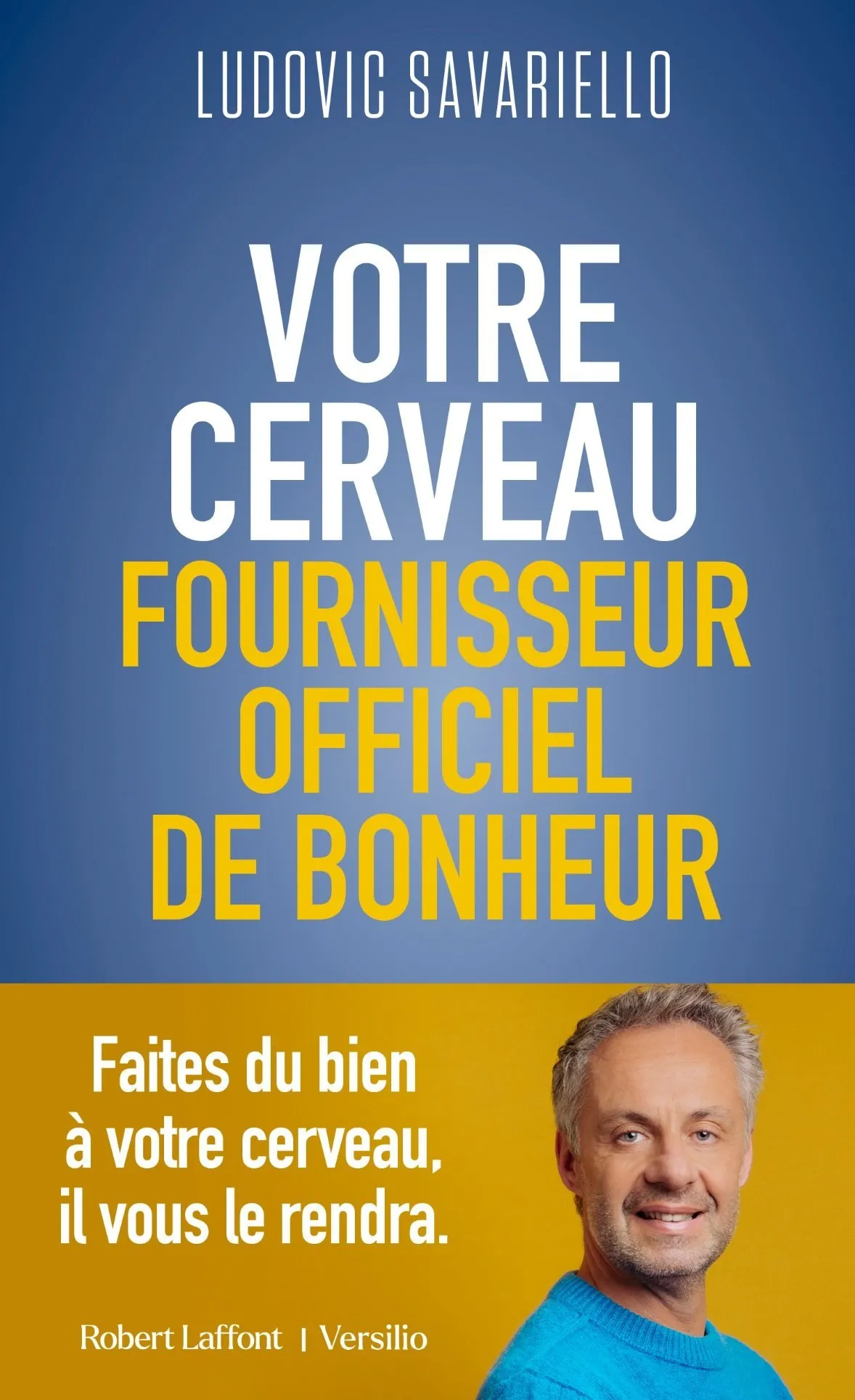
Your book “Votre cerveau, fournisseur officiel de bonheur” reflects a wish to make complex notions accessible. Do you see a link between the teaching skills acquired along your path and the approach to popular science that is part of engineering culture?
Absolutely.
My publishers, Robert Laffont and Versilio, took on the project precisely for that reason: it is a personal development book driven by a scientific approach, explained by an engineer who tries to make accessible tools that everyone should have.
It is paradoxical that, throughout our education, we never learn to use this fabulous “machine” that controls our thoughts, our choices, our actions, our stress, our motivation, our emotions, our feelings, our optimism or our pessimism – in short, the way we see the world.
That is where school should begin.
Looking back, what did your time at the school bring to the construction of this unusual path? And what advice would you give today to young graduates who, like you, want to explore less conventional careers?
Do not let yourself be shut into boxes or standards. In those mental prisons, nothing is possible.
A friend of mine, a palliative care doctor, often tells me that his patients’ greatest regrets come down to one sentence: not having dared.
So do it. Dare. Fail. Start again.
You will learn. You will be alive. And you will succeed.